exam
- 200-201 , Cisco , Cisco 200-201 CCNACBR (CCNA Cybersecurity) , Cisco CyberOps Associate , Cybersecurity Certifications , Network Engineering Careers , SOC & Threat Analysis Skills
- June 30, 2026
- 554 views
Cisco 200-201 CCNACBR Study Roadmap: A Smarter Way to Prepare Without Wasting Time
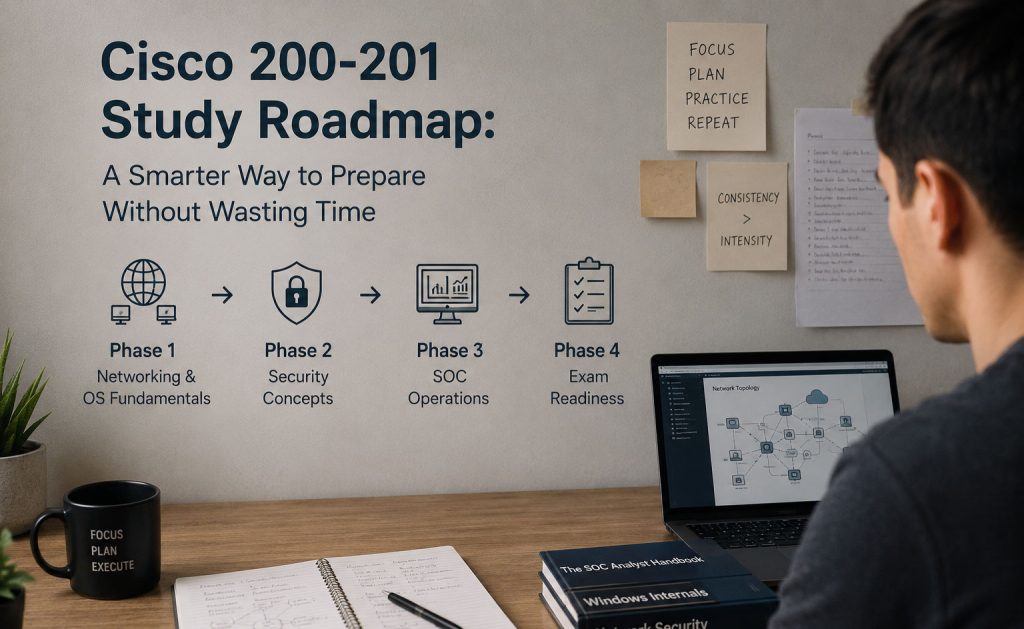
Many Cisco 200-201 CCNACBR candidates don’t fail because the exam is “too hard.” They struggle because their preparation starts in chaos. One week it’s YouTube playlists, the next week it’s PDF exam questions, and somewhere in between they try to memorize random SIEM alerts without understanding what they represent.
I’ve seen this pattern repeat for years while training junior SOC analysts and CCNA-level engineers moving into cybersecurity. The frustration usually sounds the same: “I studied everything, but nothing feels connected.“
That feeling is the real problem—not the exam itself.
The roadmap you’re about to read isn’t about adding more resources. It’s about removing friction. Because once you understand how SOC analysts actually think, Cisco 200-201 CCNACBR stops being a memory test and becomesa logical workflow.
- 200-901 , 300-435 Automating and Programming Cisco Enterprise Solutions (ENAUTO) , 300-635 Automating and Programming Cisco Data Center Solutions (DCAUTO) , 350-901 Developing Applications Using Cisco Core Platforms and APIs (DEVCOR) , AI & Automation , CCNP Automation , CCNP Enterprise , Cisco , Cisco 350-901 AUTOCOR , cisco CCNA , Cisco CCNP , Cisco Certified DevNet Associate , IT Career Development , Network Engineering Careers
- June 26, 2026
- 586 views
Cisco Automation Certification Path: Inside Cisco’s Strategic Shift from DevNet to Automation
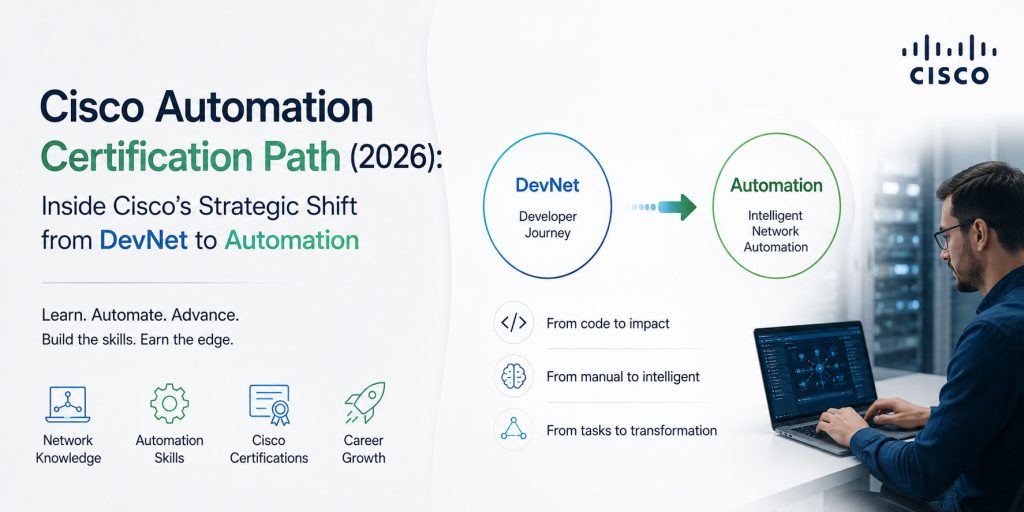
Cisco didn’t just rename DevNet to Automation—it quietly redefined what it means to be a network engineer. Behind the new certification codes like 200-901 CCNAAUTO and 350-901 AUTOCOR, there is a deeper repositioning tied to AI-driven infrastructure, enterprise cloud adoption, and the shrinking boundary between networking and software engineering.
Please note: I have cited remarks made by Cisco Live speakers without obtaining authorization to use their names; therefore, I have simply presented their views directly in the article.
Why Cisco Rebuilt DevNet into Automation (and What They’re Not Saying Out Loud)
When Cisco first introduced DevNet, it felt like a parallel track for “network engineers who code.” But over time, something shifted: enterprises stopped treating automation as optional. Internal Cisco learning materials and Cisco Live sessions over the last few years repeatedly emphasized a recurring theme—networks are becoming software systems, not configured devices.
Charles Turnbull
- 300-440 ENCC , CCNP Enterprise , Cisco , Cisco CCNP , Cloud Infrastructure , Enterprise Networking , Network Engineering Careers
- June 9, 2026
- 660 views
Why Cisco Created 300-440 ENCC When AWS And Azure Already Dominate Cloud Certifications
AWS and Azure have largely won the battle for cloud platforms.

Yet Cisco continues investing in cloud connectivity certifications like 300-440 ENCC.
That decision reveals something important about how enterprise infrastructure is evolving.
The cloud market is no longer defined by who owns the most compute, storage, or platform services. The more interesting battle now revolves around how organizations connect users, branches, applications, SaaS platforms, security controls, and multiple cloud environments together. Cisco’s 300-440 ENCC certification exists because cloud adoption solved one problem while creating another: connectivity complexity. Cisco is not competing with AWS or Azure for cloud ownership. It is positioning itself around the infrastructure that connects everything surrounding the cloud.
🌐 The Cloud Adoption Problem Nobody Expected
The Emergence of the Connectivity Gap
When cloud computing first became mainstream, many executives assumed networking would become simpler. Move workloads into AWS or Azure, reduce dependence on data centers, and operational complexity should decline.
Recent Comments